Invoice
Extracts entity, property, vendor, and invoice number. Routes to the AP board on Monday.com with owner-based group routing.
The Document Preprocessor automates document renaming using OCR, entity matching, and batch file saving. This introduction covers the common workflows shared across all preprocessing modes.
Steps:
InvoiceProcessor.exe or DocumentPreprocessor.exe)Intranet deployment is still in progress. Check back for updates.
The preprocessor supports three document type modes, selectable from the Document Type dropdown.
Invoice
Extracts entity, property, vendor, and invoice number. Routes to the AP board on Monday.com with owner-based group routing.
Document
Classifies lease and property management documents by type (amendment, estoppel, notice, etc.) and matches to a property. Saves to category-based folders on the server.
Automatic
Detects whether each uploaded file is an invoice or a document and processes it with the appropriate pipeline. Useful for mixed batches.
Automatic mode runs classification on each uploaded file to determine if it is an invoice or a general document, then applies the correct processing pipeline. This is the fastest way to handle a mixed stack of files without manually switching modes.
After processing, each file in the stack shows its detected type. Invoices get entity/vendor/invoice number extraction while documents get doc type/property classification. You can correct the detection if needed and upload invoices to the AP board and task notices to the M&O board in a single session.
The preprocessor offers two layouts for reviewing documents, selectable from the sidebar.
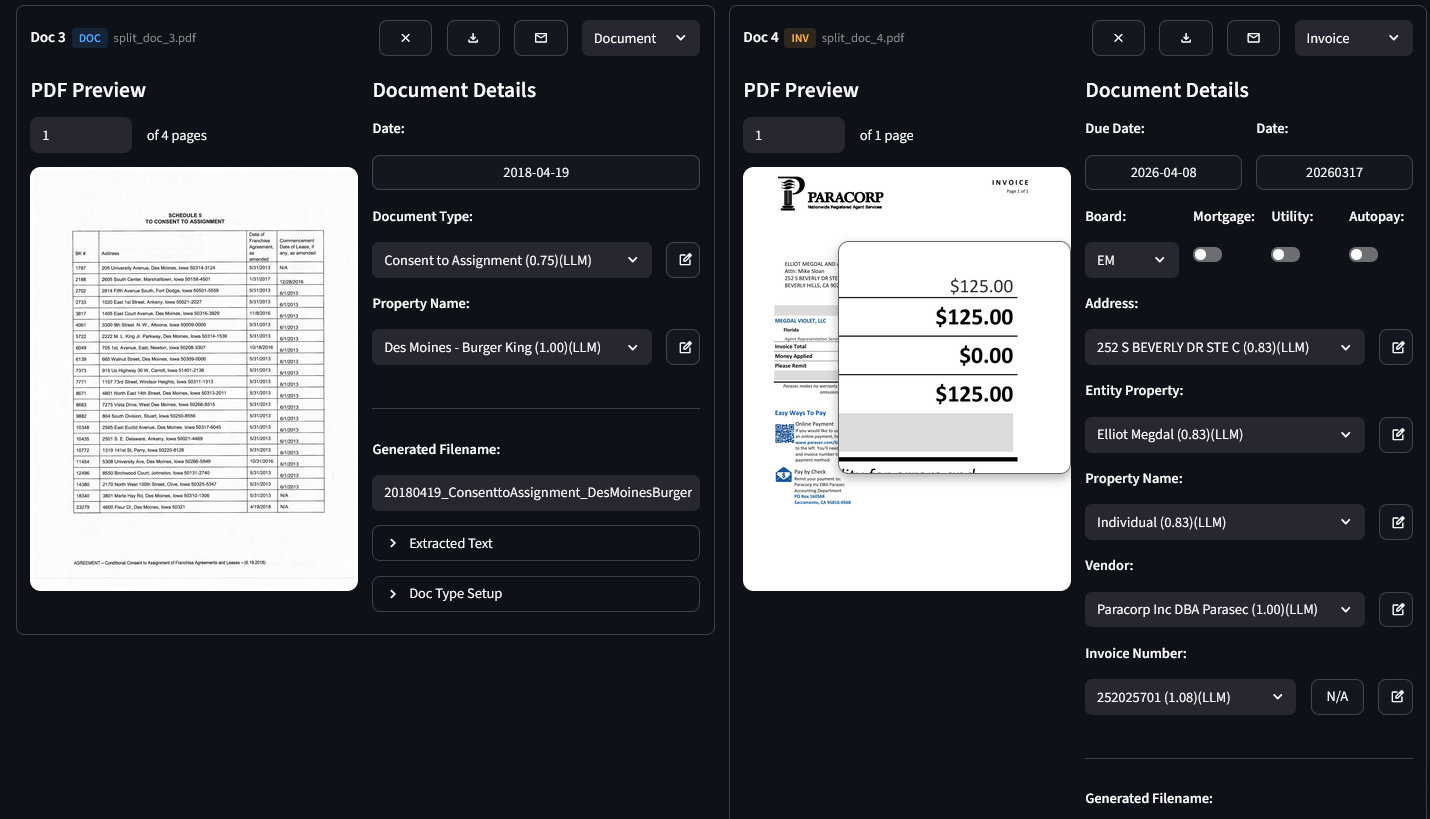
2-Column View
The default layout. PDF preview on the left, document details on the right. One document at a time — navigate between them with the Previous/Next buttons.
Best for reviewing individual documents closely, verifying extracted text, and correcting fields.
Scroll View
All documents in a scrollable list. Each shows a compact card with its preview, detected fields, and filename. Multiple documents visible at once.
Best for quickly scanning a large batch, spot-checking results, and making bulk corrections.
In 2-Column view, a top menu bar appears above the document details panel.
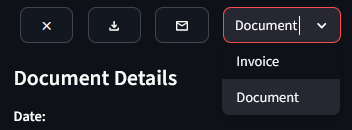
From left to right:
| Button | Action |
|---|---|
| Remove | Removes the current document from the processing stack. Does not delete the file from disk. |
| Download | Downloads the current document with its filename to your browser. |
| Opens the email dialog to send the current document to recipients. | |
| Document Type | Reprocess the current document as Invoice or Document. Use this to correct a misclassification in Automatic mode (only affects the selected document). |
A green Server connection active message under the heading indicates the system can save directly to server folders. If you don’t see this message, files will save locally instead.
Drag PDF or DOCX files into the upload box or click Browse files. Multiple files can be uploaded at once.
After uploading, click Process PDFs to extract data. Processing multiple files will be parsed using multiple threads.
PDF Navigation
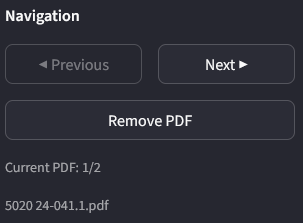
Use Previous and Next to move between uploaded documents. Changes save automatically.
Remove PDF removes the current file from the processing stack but does not delete it from your hard drive.
Page Navigation
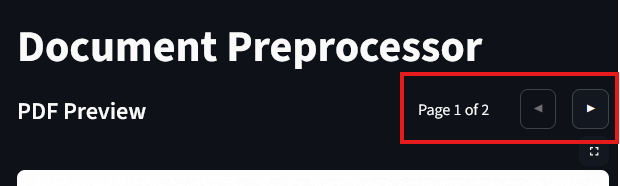
Navigate through pages within multi-page documents using the ◀ and ▶ buttons.
Use this to verify details across multiple pages.
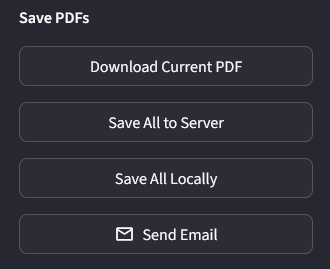
Download Current PDF: Save the currently displayed document with its generated filename to your browser downloads.
Save All to Server: Batch save all processed documents to the server. Location depends on the preprocessing mode and entity configuration.
Save All Locally: Batch save all processed documents to your Documents folder at Documents\renamed_pdfs.
Send Email: Send the current invoice directly to selected recipients.
Send processed invoices directly from the dashboard without leaving the application.
Before sending emails, configure your Microsoft account and signature.
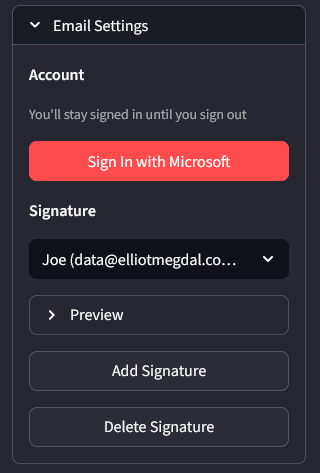
Sign in with Microsoft
Click Sign In with Microsoft in the Email Settings panel. A link will appear---click it to open the Microsoft sign-in page.
Complete authentication
Sign in with your Microsoft account. Copy the code displayed in the sidebar instructions and enter it on the Microsoft page.
Confirm sign-in
Return to the preprocessor and click Signed In on the sidebar to confirm authentication. The status will update to show you’re signed in.
Set up your signature
Select an existing signature from the dropdown (pulled from classic Outlook) or click Add Signature to create a new one. Click Preview to verify your signature appears correctly.
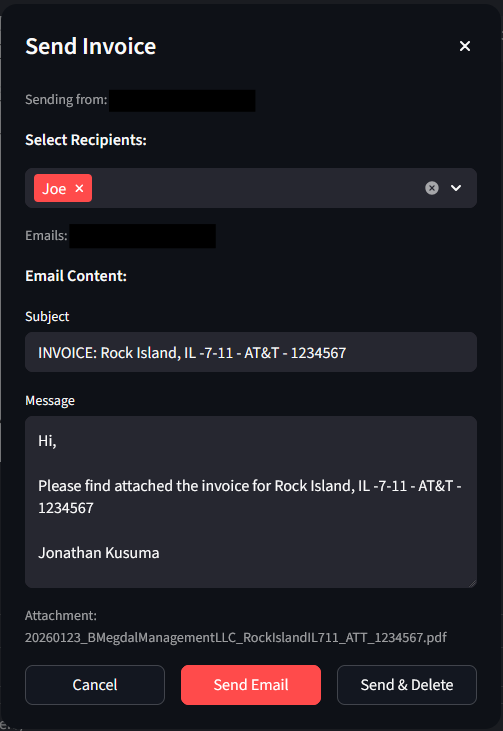
Click Send Email
From the Save PDFs panel, click Send Email to open the send dialog.
Select recipients
Choose recipients from the dropdown. Multiple recipients can be selected.
Review content
The subject and message body auto-populate based on the current invoice. Edit if needed.
Send
Click Send Email to send immediately, or Send & Delete to send and remove the invoice from the processing stack. Click Cancel to close without sending.
Click Manual next to any field to override automatic detection. This allows you to enter custom values when the system’s matching is incorrect.
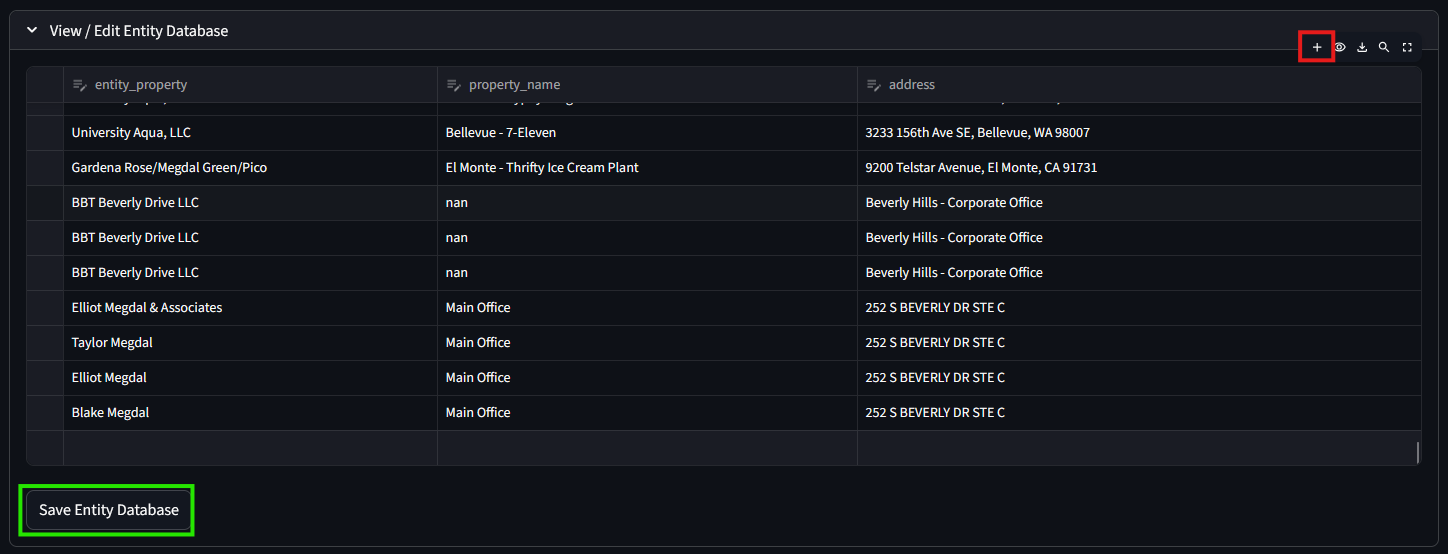
Before processing, verify your entity and vendor database is current. Both entity and vendor records follow the same editing workflow.
Customize the application display and tools from the App Settings panel in the sidebar.